Regional Guide
Canary Islands Cigars
The Canary Islands are Spain's cigar islands: La Palma is known for hand-rolled puros palmeros, and in the 1960s and 1970s Gran Canaria produced some of the best-selling premium cigars in the United States.
Updated · Cigars Spain Editorial Team
How Estancos Work →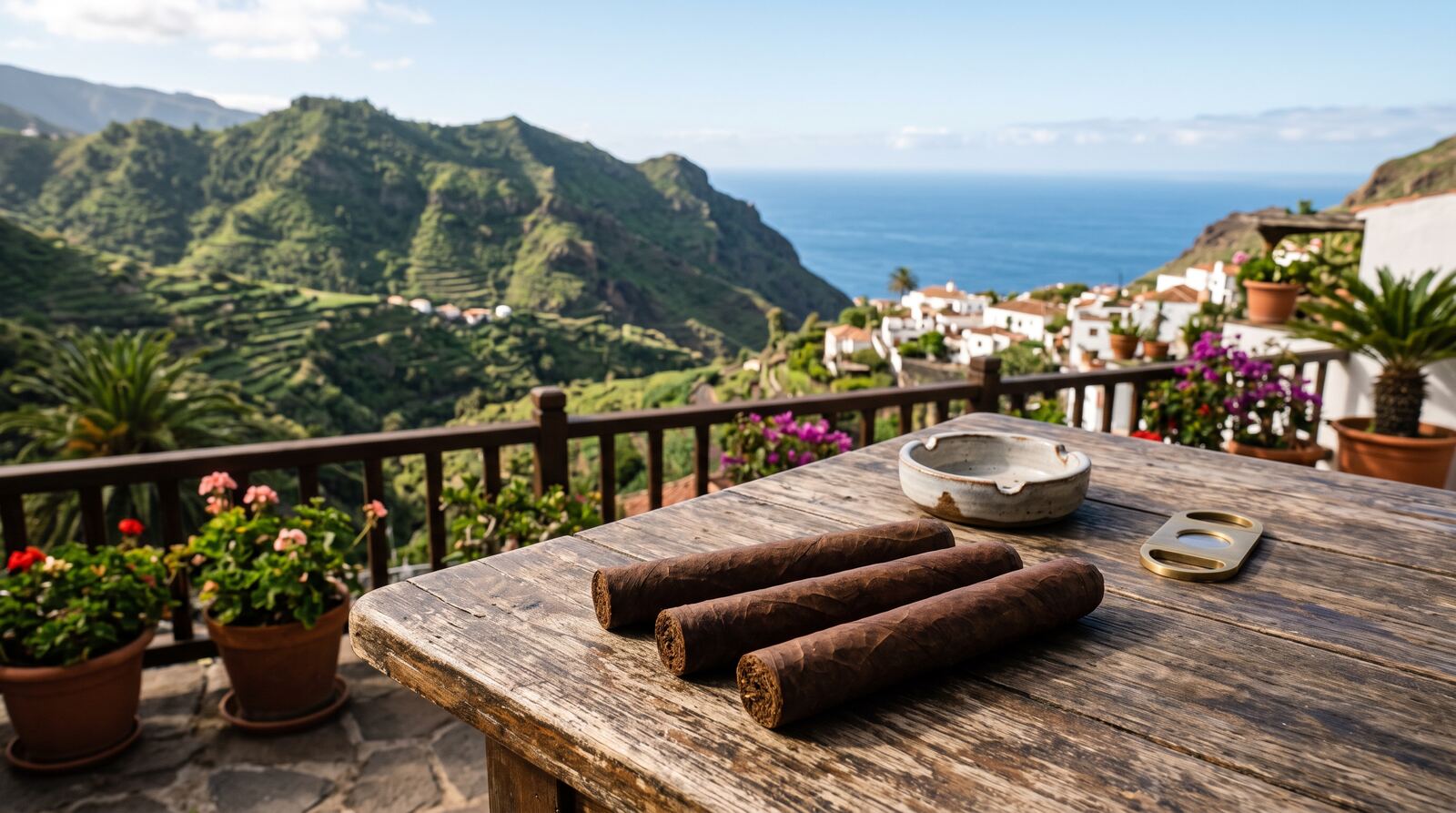
Off the coast of Africa, the Canary Islands have a cigar story that runs in both directions across the Atlantic. Canary Islanders emigrated to Cuba in large numbers and helped build its tobacco industry, and some brought their skills home again.
Canary Islanders in Cuba
From the 18th century onward, many Canary Islanders settled in Cuba, and many worked in tobacco farming in regions such as Vuelta Abajo. Several of Havana's important cigar factories were founded by people with roots in the islands. Families moved back and forth, and money and knowledge from Cuba shaped island towns.
La Palma and the Puro Palmero
La Palma, the green "isla bonita," is the islands' traditional home of the hand-rolled cigar. The puro palmero is made by small family workshops, often with long-filler tobacco and a local tradition of rolling that echoes Cuban methods. Cigar making was one of the main economic activities of the municipality of Breña Alta, especially between the 1920s and the 1960s.
The Museo del Puro Palmero
In Breña Alta, the Museo del Puro Palmero tells the story of La Palma's cigars with panels, multimedia displays and period tools, alongside the island's other crops such as vines, sugar cane and bananas. Its shop sells local cigars and crafts. Check opening hours before you visit.
Gran Canaria's Factories
After the Cuban Revolution, the Menéndez and García families, who had helped build the reputation of H. Upmann in Havana, moved to the Canaries and set up a factory on Gran Canaria. Using Cuban leaf at first, they produced Montecruz, which became the leading premium cigar sold in the United States in the 1960s. In the 1970s, brands such as Don Diego were also made in the islands.
The Move to the Dominican Republic
Rising labor costs and duties made island production expensive. In the 1970s much of the industry moved to the Dominican Republic, and Spain's entry into the European Community in 1986 priced remaining Canary cigars out of the U.S. market. Learn about Dominican cigar country on our sister site, Santiago and the Cibao Valley.
Tobacco Rules on the Islands
The Canary Islands sit outside the EU's excise and VAT territory and have their own lower tobacco taxes. Tobacco is therefore cheaper than on the mainland and is also sold outside estancos. Because the islands are outside the EU tax area, travelers flying from the Canaries to mainland Spain or other EU countries are subject to the stricter allowances for goods from outside the EU, typically 50 cigars. See EU cigar allowances.
Buying Island Cigars
Buy from workshops, the museum shop or established tobacconists, and ask how the cigars were made and what tobacco they contain. Many island cigars today blend imported leaf with local tobacco. Store hand-rolled cigars in a humidor once you get home.
Frequently Asked Questions
What is a puro palmero?
A hand-rolled cigar made in small workshops on La Palma in the Canary Islands.
Where is the cigar museum on La Palma?
The Museo del Puro Palmero is in Breña Alta, on the east side of La Palma.
Were Montecruz cigars made in the Canary Islands?
Yes. Montecruz was made on Gran Canaria and was the leading premium cigar in the U.S. in the 1960s.
Is tobacco cheaper in the Canary Islands?
Yes. The islands have their own lower tobacco taxes outside the EU excise system.
How many cigars can I take from the Canaries to mainland Spain?
Travelers are generally subject to non-EU allowances, typically 50 cigars.