History
The Royal Tobacco Factory of Seville
Seville's Real Fábrica de Tabacos was built between 1728 and 1770, employed about 6,000 women cigar makers at its peak, inspired the opera Carmen, and has housed the University of Seville since the 1950s.
Updated · Cigars Spain Editorial Team
Canary Islands Cigars →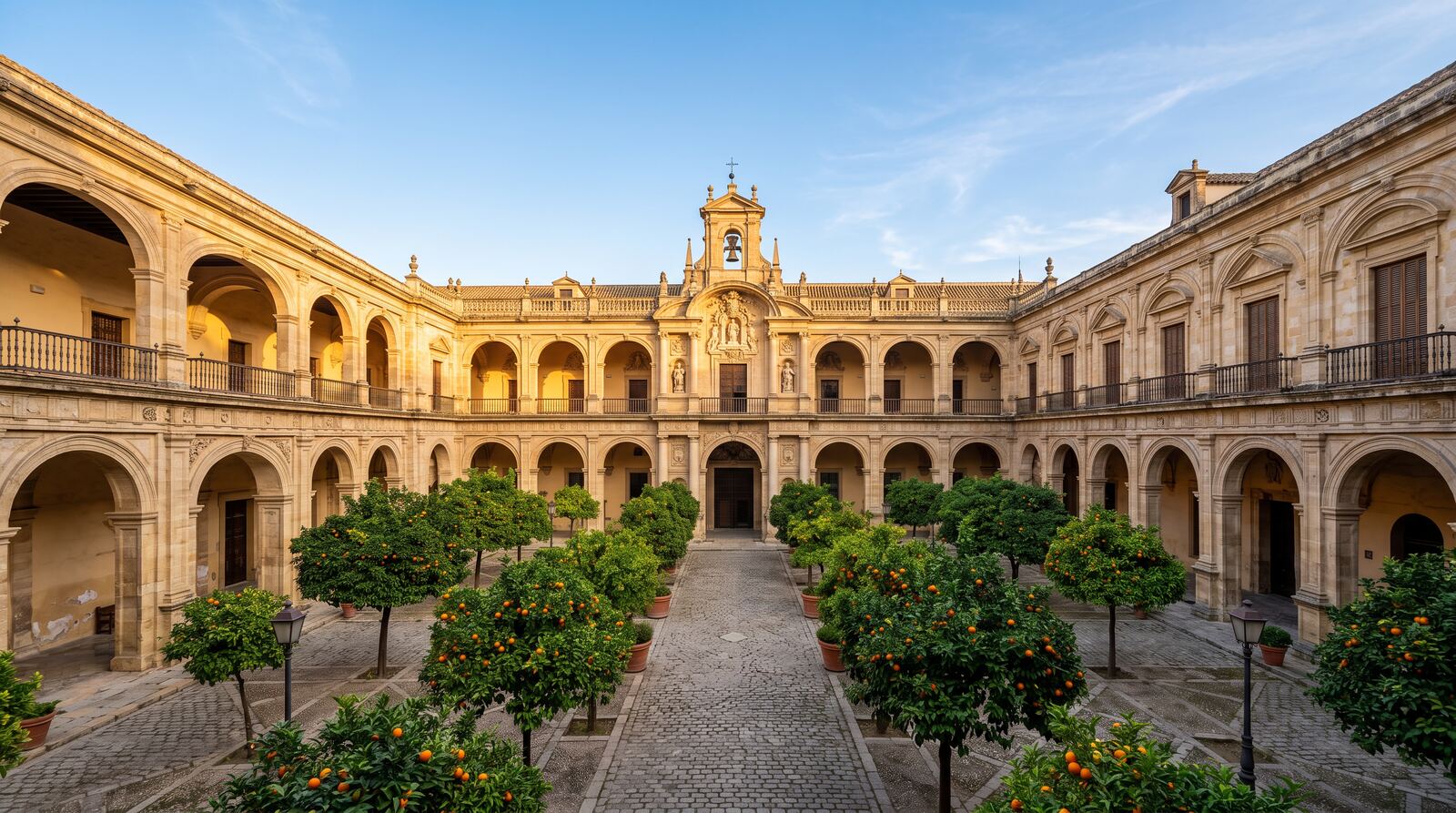
Walk south from Seville's cathedral and you reach one of the largest buildings in Spain: the former Royal Tobacco Factory, or Real Fábrica de Tabacos. For more than two centuries it made cigars and snuff for the Spanish crown. Today it is the main building of the University of Seville.
Seville and the Tobacco Monopoly
As the port that controlled trade with the Americas, Seville received the tobacco shipped from Cuba and other colonies. The crown made tobacco a state monopoly, and by the early 18th century the city's older factories were too small for demand.
Building the Factory
Construction of the new factory began in 1728 and continued for decades; an inscription gives 1770 as the completion date. Several military engineers worked on it, with the Flemish engineer Sebastián Van der Borcht leading from 1750. The result, roughly 185 by 147 meters, was at the time the second largest building in Spain after El Escorial. It was designed like a fortress, with a moat, drawbridges and guard posts to protect a very valuable product.
The Cigarreras
From the 19th century the factory's workforce was mostly women, the cigarreras, who rolled cigars and later cigarettes by hand. At its peak in the 1880s the factory employed about 6,000 workers. The cigarreras were famous in Seville for their independence and their sense of solidarity, and visitors from across Europe came to watch them work. Mechanization steadily reduced their numbers through the 20th century.
Carmen
The factory's most famous worker never existed. Prosper Mérimée's 1845 novella Carmen made its heroine a cigarrera in Seville, and Georges Bizet's opera, first performed in Paris in 1875, opens outside the tobacco factory, where soldiers watch the women come out on their break. Carmen became one of the most performed operas in the world, and it fixed the image of the Seville cigar girl in popular culture.
From Factory to University
In 1950 tobacco production moved to a new factory in the Los Remedios district, and the old building was converted for the University of Seville in the 1950s. It is now the university's rectorate and houses several faculties. The new factory made its last products at the end of 2007.
Visiting
The building stands on Calle San Fernando, between the cathedral and the Parque de María Luisa. As a working university building it is generally open to the public during the academic day, and its courtyards, the main façade with its sculptures and the remains of the moat can be seen. Check current visiting arrangements locally.
Key Dates
| Year | Event |
|---|---|
| 1728 | Construction begins |
| 1770 | Completion date inscribed on the building |
| 1845 | Mérimée publishes Carmen |
| 1875 | Bizet's Carmen premieres in Paris |
| 1880s | About 6,000 workers |
| 1950 | Production moves to Los Remedios |
| 1950s | Building converted for the University of Seville |
Frequently Asked Questions
What is the Royal Tobacco Factory in Seville?
An 18th-century cigar and snuff factory built for the Spanish crown, now the main building of the University of Seville.
Is Carmen set in a tobacco factory?
Yes. Carmen is a cigarrera at the Seville tobacco factory, and the opera's first act takes place outside it.
How many people worked at the Seville tobacco factory?
About 6,000 at its peak in the 1880s, mostly women.
When was the Seville tobacco factory built?
Between 1728 and about 1770.
Can you visit the Royal Tobacco Factory?
It is a working university building that is generally open to the public during the academic day.